Not A Subscriber?
Join 752+ language learners getting mindf*cked every Saturday morning while getting Immersed.
How To Learn Any Language Like You're Already Native
November 15th, 2025 | Ademola Adeyemi
There’s a 23-year-old guy in Seoul right now scrolling through YouTube at 2 a.m.

He just finished a late shift, grabbed some fried chicken, and he’s looking for something to watch while he eats.
He’s not looking for “Korean learner content.”
He’s not thinking about language difficulty levels.
He’s thinking: “Do I want to watch basketball highlights? That new tech review about the iPhone? Maybe some League?”
He clicks on a basketball breakdown video analyzing last night’s game. The host is passionate, uses slang, references contexts from three seasons ago. The 23-year-old understands all of it because he’s been watching this channel since high school.
Here’s the question that changed my entire approach to language learning:
What would MY Korean counterpart watch right now?
Not “What can I understand?”
Not “What’s appropriate for my level?”
But…
What would the Korean version of me:
Same age, same interests, same personality, be watching at this exact moment?
Most language learners operate from scarcity.
They think: “I need to find something I can understand. Something with subtitles. Something slow. Something for learners.“
This creates a fundamental disconnect. Not because learner resources are bad, but because the timelines don’t match what you’re being sold.
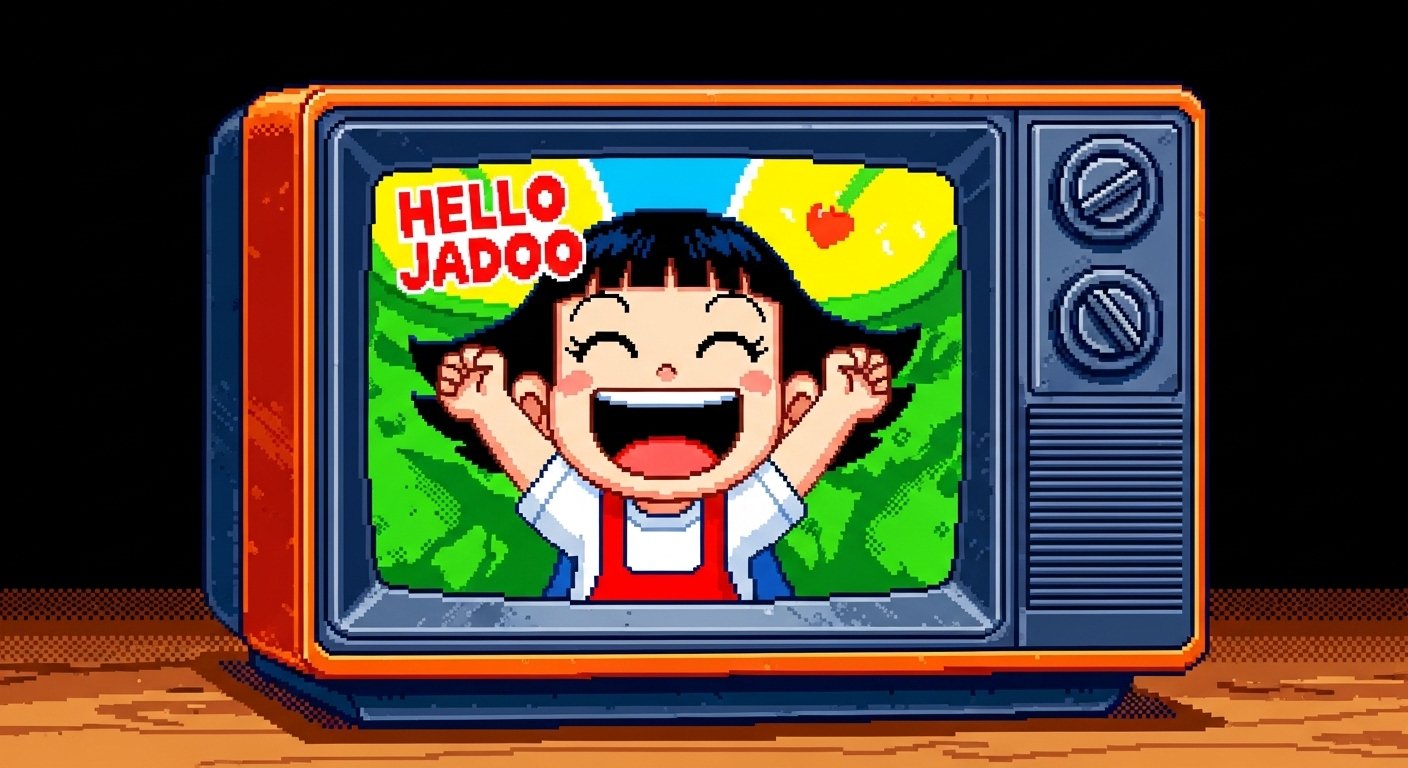
Children’s shows, graded readers, and beginner podcasts are NOT the enemy by any means.
- I watched a bunch of kid’s shows (Hello Jadoo was my jam).
- I listened to the Grammar & IYAGI podcasts by TTMIK.
- I read 40+ volumes of Korean Reading for Foreigners (외국인을 위한 한국어 읽기).
And I enjoyed them all. I made them part of my exploring different types of content to see how I felt.
If you’re genuinely entertained, keep at it.
If you’re not? That’s your signal.
Consider using the “leveled stuff” for dedicated study time early on. Your focused grammar review, your vocabulary drills, your textbook work.
But for immersion (in the lifestyle sense) follow your interests.
We’re trying to reach adult native-level fluency.
You can’t ignore the timeline disconnect. Learner resources promise you’ll “get there” by progressing through levels. But natives didn’t progress through levels in the same way. They live in the language.
Which brings us to the real strategy.
The Mirror Strategy (And Why It Works For Any Language)
Start with identity, not ability.

I’m a 23-year-old who loves basketball. I follow tech. I watch commentary videos about cultural issues. I debate philosophy with my friends. I binge-watch shows until 4 a.m. when something grabs me.
There’s a 23-year-old Korean guy who does the exact same things. He exists. Right now. He’s watching something. He’s interested in something. He’s passionate about something.
What is he watching? Not “what CAN he watch” (he can watch anything).
What WOULD he watch given OUR interests?
When I applied this lens, everything changed.
The 5-Step Mirror System
Most understand the concept but freeze when it’s time to implement. Grab a pen and paper. Let’s get into the how.
Step 1: Define Your Mirror Self
You can’t find your mirror if you don’t know who you’re looking for.
Open a note and answer:
- What do I actually do in my free time? (Not what I should do, what do I actually do?)
- What topics could I talk about for an hour without getting bored?
- What’s the last thing I consumed that I couldn’t put down?
- If I had a free Saturday, what would I choose to watch?
Write 5-10 specific interests. The more specific the better.
When I did this, my list was:
- NBA game breakdowns and player comparisons
- Tech product reviews (phones, laptops, productivity tools)
- Philosophy discussions about purpose and meaning
- Reality TV (Streamers, Live shows)
- Romance, Dating shows on Netflix
- Comedy shows roasting current events
- Late-night rabbit holes on random topics
This made searching simple. I wasn’t looking for “Korean content for learners.” I was looking for “Korean NBA analysis channels.”
The test: Could a friend look at your list and immediately think of specific channels you’d like? If yes, you’re specific enough.
Step 2: Find Your Mirror’s Content Ecosystem
Start with what you already love in English. Find 3-5 channels or creators you’d watch even if no one told you it was “productive.”
Now translate your search.
If you love “NBA analysis breakdown” in English, search for that exact phrase in your target language. Use Google Translate if needed, you’re looking for native terminology.
My Korean searches:
- “한국 NBA 분석” (Korean NBA analysis)
- “갤럭시 리뷰” (Galaxy review)
- “아이폰 vs 갤럭시” (iPhone vs Galaxy)
- “한국 예능 추천” (Korean variety show recommendations)
Add “추천” (recommendation) or the equivalent. This pulls what natives recommend to each other, not to learners.
Look for:
- High view counts (for that language)
- Active comment sections in the target language
- Consistent upload schedules
- Content made for natives, not tourists
Don’t compare production quality to English. You’re not looking for “as good as” English creators. You’re looking for what your mirror actually watches.
If your language has limited content:
Get creative:
- Join Reddit communities and ask what people watch
- Search “best [topic] channels in [language]”
- Check what’s trending on YouTube in that country
- Ask native speakers directly
- ChatGPT is always a trusty option
Build a list of 10-20 channels, shows, or podcasts. You won’t love all of them, but you need options.
Step 3: Build Your Consumption Architecture
Finding good content means nothing if you don’t build a system to actually consume it.
Organize content into three tiers:
Background Tier (1-2 hours daily): Content you can have on while doing other things—cooking, working out, commuting.
For me: Korean variety shows, gaming streams, podcast-style videos.
Active Tier (30-60 minutes daily): Content you watch intentionally but don’t study.
For me: NBA breakdowns, tech reviews, documentaries.
Study Tier (15-30 minutes daily): Content you analyze deeply. You rewind, look up words, take notes.
For me: Philosophy discussions, comedy with cultural references, news analysis.
Your mirror doesn’t “study” everything they watch. They just watch.
Background and Active tiers give you massive exposure without burnout. Study tier gives you focused growth.
Implementation:
Create a playlist or folder for each tier. When you find a video, categorize it immediately. When you sit down to eat, pull from Background. When you have downtime, Active. When you have focus energy, Study.
This removes decision fatigue. You’re not searching every time—you’re pressing play.
Step 4: The 20% Comprehension Rule
If you understand less than 20% of what’s happening, you might be too early for that specific content.
But 20% comprehension doesn’t mean 20% of the words. It means:
- Can you follow the general topic?
- Do you catch the main points even if you miss details?
- Are there enough visual or contextual clues to keep you engaged?
When I started watching Korean NBA analysis at intermediate level, I didn’t understand 80% of the Korean. But I understood basketball. I knew the players. I recognized the plays. The Korean filled in around what I already knew.
That’s enough.
When to push through:
Understanding 20-40% and genuinely interested? Keep watching. Your brain is working even when you don’t realize it.
When to pivot:
Understanding less than 20% AND not enjoying it? Find content in the same topic that’s more accessible—shorter videos, more visual, clearer speakers.
Or find a different topic. Your mirror has multiple interests. So do you.
The rewatch strategy:
Watched a video at 30% comprehension and loved it? Watch it again in a month. You’ll catch 50%. Then 70%. The second watch always clicks differently.
Step 5: Track Your Mirror Evolution
You need to know it’s working. Not through test scores—through lived experience.
Monthly check-in:
- What content am I drawn to now that I wasn’t before?
- What did I understand this month that I couldn’t last month?
- How many hours did I consume? (Background + Active + Study)
- Am I forcing myself to watch, or genuinely choosing this?
The shift you’re looking for:
In the beginning, it feels like work. You’re choosing it because you “should.”
After 3-6 months, something changes. You’re watching because you want to know what happens next. You’re clicking videos because you’re genuinely curious, not because it’s “good for your language learning.” You start to find your favorite creators. They upload. You get excited and you dive in.
Around month 4, I stayed up until 2 a.m. watching a Korean variety show—not for “immersion,” but because I needed to know who won the game. I forgot I was watching in Korean until I went to discuss it and had to translate my thoughts back to English.
That’s the moment. That’s when the mirror stops being a strategy and starts being your life.
Metrics that matter:
- Hours consumed per week (aim for 10-20 across all tiers)
- Videos you finish vs. abandon (finishing rate should increase)
- Topics you can discuss with natives (even with imperfect grammar)
- Moments where you forget you’re in your target language
Every 2-3 months, revisit Step 1. Your interests shift. Your mirror might start watching different content. That’s natural.
When I hit advanced level, my Korean mirror moved from dubbed anime to political debates and business podcasts. Your mirror grows with you.
The Result
After finding Korean Ade’s choices, I stopped thinking in terms of “learner content” and “native content.”
It was all just “content I’m interested in” and “content I’m not.”
My friends would recommend shows, and I’d watch them the same way they did, binging at 3 a.m., texting reactions, rewatching favorite scenes.
I wasn’t studying Korean anymore. I was living a parallel life through it.
The line between learning and living disappeared.
Your counterpart exists in your target language. They have interests. They consume content. They laugh at jokes. They debate with friends.
Stop consuming through the lens of “what can I understand as a learner?”
Start consuming through the lens of “what would I watch if this were my first language?”
The gap feels massive now. But your counterpart will guide you forward.
You’re not trying to become a different person.
You’re trying to become yourself—just in a different language.
Find your mirror. Follow their interests. Watch what they watch.
Deliberately create the exposure natives get automatically.
Gradually, the reflection becomes reality.

Struggle Less. Acquire More. Enjoy Life.
Studied at Yonsei University. Worked in Korean politics. Reached fluency in 18 months through pure immersion.
Now I help language learners cut through the noise and achieve what most think is impossible.
Gain A New Perspective On Language & Life
I went from understanding 0% of Korean dramas to discussing politics at Yonsei in 25 months—using the same immersion principles I teach every Saturday.