Not A Subscriber?
Join 752+ language learners getting mindf*cked every Saturday morning while getting Immersed.
The Two-Playlist Time Machine (How To See Language Progress)
December 20th, 2025 | Ademola Adeyemi
Your progress is real. You just need a reference point.
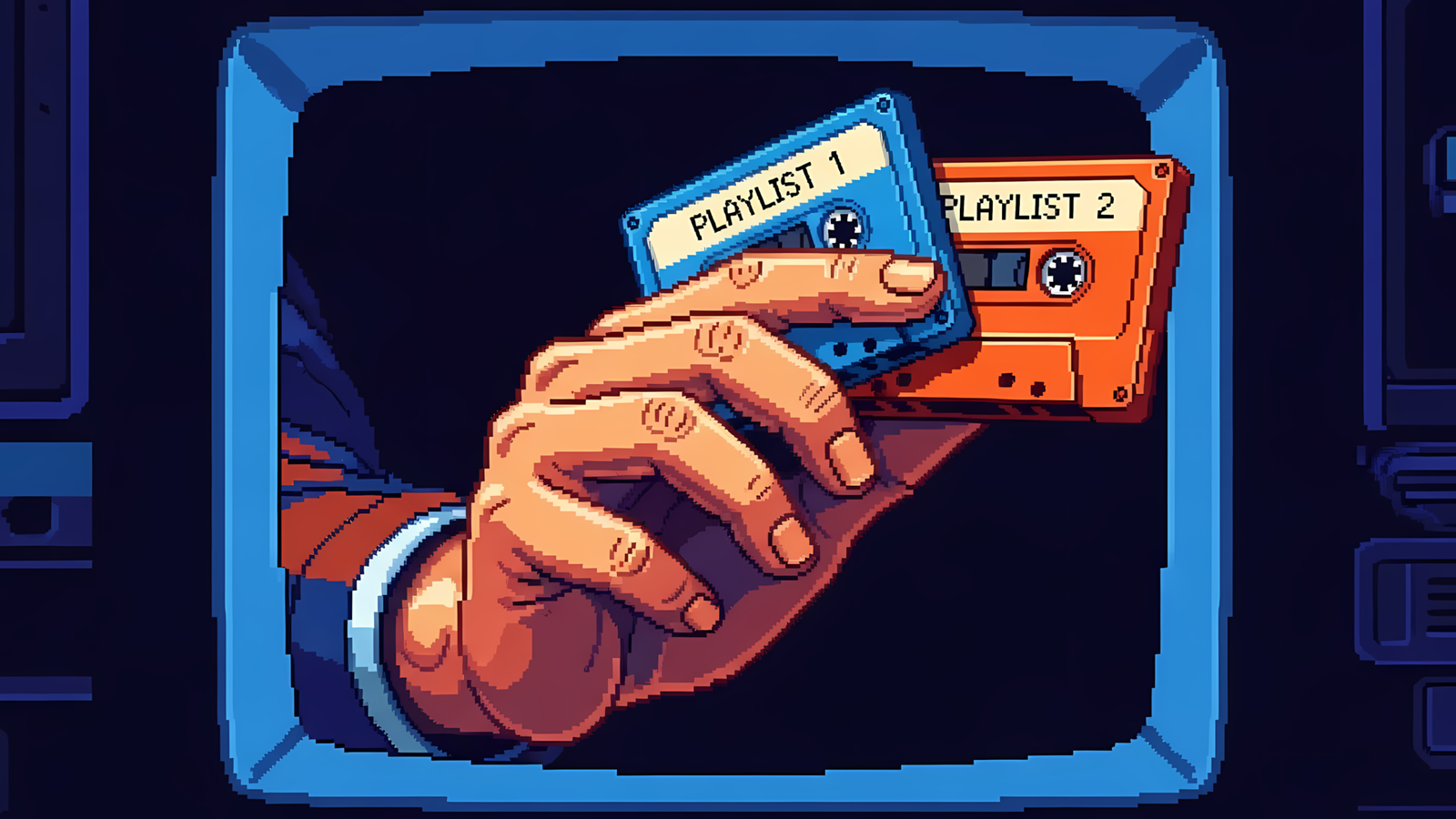
The Invisible Growth
Every language learner has the same nightmare: Am I actually improving, or am I delusional?
You study every day. You do your flashcards. You watch your shows. You feel like maybe, possibly, you’re getting better?
But you’re not sure.
The goalpost keeps moving. Every time you understand something, you immediately notice ten things you don’t understand. Progress feels invisible because you’re living in the present, and the present always feels insufficient.
This is where most learners quit. Not because they’re not improving—they are—but because they can’t feel it.
Languages have tens of thousands of words. Your SRS has a few hundred cards. How the heck are you supposed to catch up?
You’re not crazy for feeling this way. This is the psychological trap every learner falls into.
But here’s the thing: you’re measuring wrong.
Improvement is like watching your hair grow. It’s happening, but you can’t see it while it’s happening. You need a reference point. You need to stop comparing yourself to the finish line and start comparing yourself to where you were last month.
Enter the two-playlist time machine.
How the System Works
The system is simple:
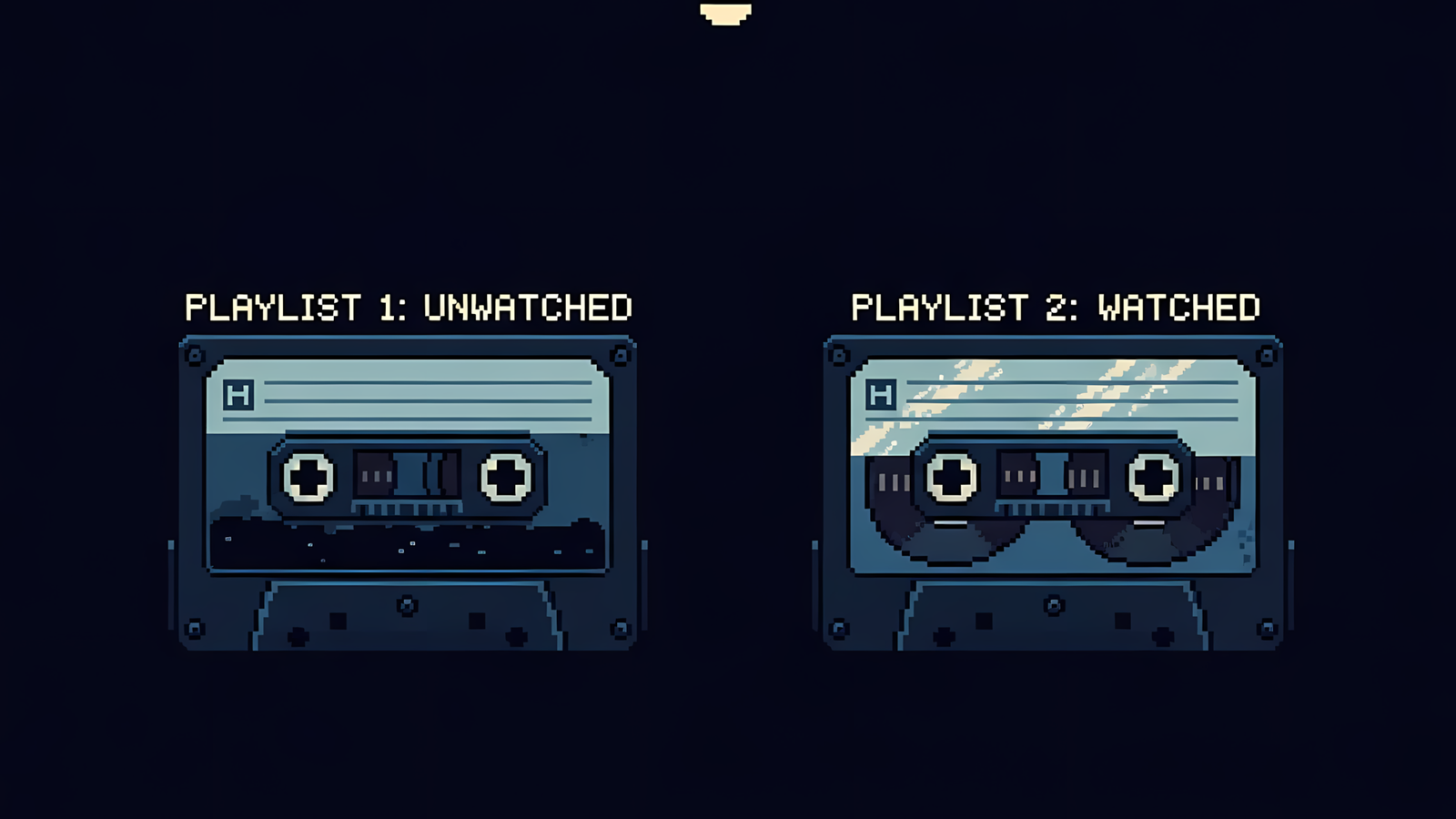
Playlist 1: Watch Later (Unwatched) → Content you haven’t actively studied yet
Playlist 2: Listen Later (Watched) → Content you’ve already immersed in
I use YouTube playlists, and that’s what I’ll focus on here because it’s the easiest implementation. But this works on any platform where you can organize content:
- Spotify folders for podcasts
- Bookmark lists for articles
- A simple note on your phone tracking what you’ve watched on Netflix or Disney+
- Playlists of K-pop songs you’ve mined vocabulary from
Playlists just make the system frictionless, but the principle works regardless of platform.
When you’re doing your active immersion—your focused study time where you’re watching content with full attention—you pull from Playlist 1. You watch an episode of a YouTube series, a drama, a podcast with a transcript.
When you encounter a word that doesn’t stick after looking it up once or twice, that’s your cue: save it as a sentence card in your SRS. Don’t mine everything you look up. Just the stuff that won’t stay in your brain naturally.
You’re learning these words in your flashcards so you can acquire them through immersion.
Then you move that content to Playlist 2.
Playlist 2 becomes your passive listening—the stuff playing in your earphones while you walk, do homework, exercise, cook. Passive listening doesn’t mean you’re ignoring it. It means the language is in your ears while your attention is on something else. You’re not pausing to look things up or study. You’re just letting your brain absorb what it already knows.
This trains your ear. You know these words when you read them or see them with subtitles, but your brain hasn’t fully connected the sounds yet. Passive relistening bridges that gap. You’re not studying—you’re training your brain to recognize spoken patterns automatically.
And then, every month, you do something magical: You travel back in time.
My Accidental Discovery
I discovered this accidentally around month five of learning Korean.
I was feeling discouraged. Everyone in the language learning communities I followed was talking about their progress, posting about how much they understood, and I felt behind. I felt like I was spinning my wheels.
So one night, frustrated, I opened my “Watched in June” playlist—this was early August—and clicked on a web drama episode I’d struggled through two months earlier.
Within thirty seconds, I had this moment: “Holy shit. I understand this.”
Not perfectly. But substantially. Jokes I’d completely missed in June were obvious now. Grammar patterns that had confused me made perfect sense. Vocabulary that had sent me to the dictionary was just… there. Available. Automatic in my brain.
I wasn’t comparing myself to native speakers anymore. I wasn’t comparing myself to the advanced learners online. I was comparing myself to myself from two months ago, and that comparison was undeniable.
I was objectively, measurably, dramatically better than I’d been in June.
And the thing is, I didn’t feel better day by day. I felt the same. Maybe even worse, because I kept noticing new things I didn’t know. But the time machine doesn’t lie. Past-me from June couldn’t understand this content. Present-me in August can.
That’s not an opinion. That’s not a feeling. That’s a fact.
Why This Makes Progress Tangible
This is why the two-playlist system is so powerful: It makes progress tangible.
Most learners drown in the ocean of “I’ll never be good enough.” They watch native-level content and feel hopeless. They compare themselves to people who’ve been studying for five years and feel inadequate. They measure themselves against an imaginary standard of “fluency” that keeps receding into the distance.
But the time machine short-circuits all of that. It doesn’t ask, “Are you fluent?” It asks, “Are you better than you were last month?” And if you’ve been doing the work, the answer is always yes.
Some learners take this even further. They create monthly archives.
Here’s how the workflow works: At the end of each month, rename your “Listen Later” playlist to include the month—”Listen Later – January.” Then create a fresh “Listen Later” playlist for February. No need to manually move videos around; the renaming does all the work.
Now you have monthly time capsules stacked up:
- Listen Later – January
- Listen Later – February
- Listen Later – March
- Listen Later – April
Now you don’t just have one comparison point. You have a ladder. You can watch January content in March and see the gap. You can watch February content in April and feel superhuman. You’ve created a visual, auditory, undeniable record of your progress.
It’s like those doorframe marks parents make to track their kid’s height. You don’t notice yourself growing day by day. But put your back against the doorframe, and the marks don’t lie. You were here in January. You’re here now. The distance is real.
The Psychological Crisis It Solves
This solves the psychological crisis of language learning: the feeling that you’re not improving.
Because you are. You absolutely are. But improvement is gradual, and gradual feels invisible. The time machine makes the invisible visible.
It also solves another problem: the moving goalpost.
When you only look forward, the goalpost moves. You think, “Once I can understand my favorite show without subtitles, I’ll be good.” So you work toward that. You grind. You study. And then one day, you sit down, press play, and you can actually follow along without subtitles.
Victory, right?
Except now you’re watching, and you realize: “Wait, I still can’t understand the news.” Or you stumble across a podcast and think, “I can’t follow native conversations at natural speed.” Or you try reading a novel and hit a wall.
There’s always another level. Always another domain you haven’t mastered.
That’s not a flaw in your learning. That’s the nature of improvement. The beauty—and the curse—of language mastery is that there’s always depth to reach. The goalpost moves because language is vast, and every time you level up, you see new territory you didn’t even know existed before.
But when you look backward, the goalpost is fixed. January-you couldn’t do what April-you can do. That’s not debatable. That’s not subjective. The time machine proves it.
And psychologically, that proof is everything.
When you feel like quitting, when you feel like you’re wasting your time, when you doubt whether this is working—you pull up the Listen Later – January playlist. You press play. And within thirty seconds, you remember: Oh right. I’m winning. I just forgot because winning is so gradual.
When to Start This System
This system works best once you have enough vocabulary to follow along with beginner-friendly content—even if you’re pausing constantly and looking things up. If you’re in the first 2-3 months and still building your foundation with basic vocabulary and grammar, focus on rewatching and relistening to the same content repeatedly until it clicks.
Once you have 300-500+ words in your SRS, start expanding your Watch Later playlist with new content.
Here’s the key for beginners: if your comprehension is still very low, you’ll benefit more from intensive repetition of a small amount of content than from consuming lots of new material. I like to think of these as “immersion projects”—specific domains or shows that become your comfort zone:
- A slice-of-life drama
- A YouTuber you vibe with
- A podcast on topics you care about
Each project has its own vocabulary ecosystem. Words, phrases, grammar patterns that show up repeatedly within that domain. When you relisten to content from a project, you’re not just reviewing—you’re strengthening the neural pathways for that entire domain.
And here’s the beautiful part: The vocabulary and patterns from one project bleed into others. The slice-of-life drama teaches you everyday conversation. The YouTuber teaches you casual speech. The podcast teaches you how people actually talk when they’re not performing for a camera.
This is where passive relistening becomes magic. Your brain is doing work you can’t consciously track. Every time you relisten to studied content, your subconscious mind is piecing things together, noticing patterns, identifying high-frequency sounds and phrases.
Eventually, something clicks. A word you’ve heard dozens of times without noticing suddenly stands out. Your brain sends a signal to your conscious mind: “Hey, what’s that? I feel like I’ve heard that before.”
That’s your subconscious marking things down in the background. The more exposure you have, the more your brain identifies what’s worth paying attention to. It’s filtering for frequency, for relevance, for patterns. And passive listening is where this process thrives because there’s no pressure. You’re not trying to understand everything. You’re just… existing with the language in your ears.
For me, relistening to old content hits different. It’s like revisiting memories. I hear a line from a show I studied months ago, and I get this nostalgic rush—not just for the content, but for where I was in my learning journey when I first encountered it. That’s the time machine effect. You’re not just reviewing language. You’re revisiting past-you and seeing how far you’ve come.
But once you can follow the gist of beginner content, even with effort, the two-playlist system becomes your growth engine. You start balancing new content (Playlist 1) with relistening (Playlist 2), and the combination accelerates your progress in ways that feel almost unfair.
This Works for Readers Too
Keep a “Read Later” and “Listen Later” list for books and articles. After you finish a chapter, queue up the audiobook version for that chapter in your passive listening rotation. You’ll hear words you saw on the page and connect the sounds to the meanings.
You’ll consciously know you should be able to understand this when listening, but you can’t yet. Audiobook relistening fixes this. You spend more time listening, your ears get sharper, and suddenly spoken language that used to sound like noise becomes comprehensible.
The Anti-Despair Mechanism
The two-playlist time machine isn’t just a practical organization system. It’s an anti-despair mechanism. It’s proof you’re not crazy. It’s evidence that the invisible work you’re doing every day is real.
Progress isn’t a feeling. It’s a fact. And the time machine shows you the receipts.
Set a calendar reminder for the first of each month. Spend 15 minutes rewatching or relistening to content from 1-2 months ago. You don’t need to take notes or analyze anything. Just press play and pay attention to what you understand now that you didn’t understand then.
That gap between past-you and present-you? That’s not luck. That’s not talent. That’s the accumulation of every flashcard review, every listening session, every moment you chose to keep going when it felt pointless.
The time machine doesn’t just prove you’re improving. It proves that improvement is inevitable if you keep showing up. And sometimes, that’s the only proof you need to show up again tomorrow.

Struggle Less. Acquire More. Enjoy Life.
Studied at Yonsei University. Worked in Korean politics. Reached fluency in 18 months through pure immersion.
Now I help language learners cut through the noise and achieve what most think is impossible.
Gain A New Perspective On Language & Life
I went from understanding 0% of Korean dramas to discussing politics at Yonsei in 25 months—using the same immersion principles I teach every Saturday.