Not A Subscriber?
Join 752+ language learners getting mindf*cked every Saturday morning while getting Immersed.
How To Choose A Language Method That Leads To Your Treasure (Not Theirs)
December 14th, 2025 | Ademola Adeyemi
Which language learning method actually works?
You want to learn a language.
So you search online.
One expert says speak from day one. Another says don’t speak for two years. A third says you need four years of university. A fourth says learn five languages at once.
Every single method swears it leads to “fluency.”
But when you try to compare them, nothing makes sense. The timelines don’t match. The requirements contradict. The results look completely different.
So you’re stuck.
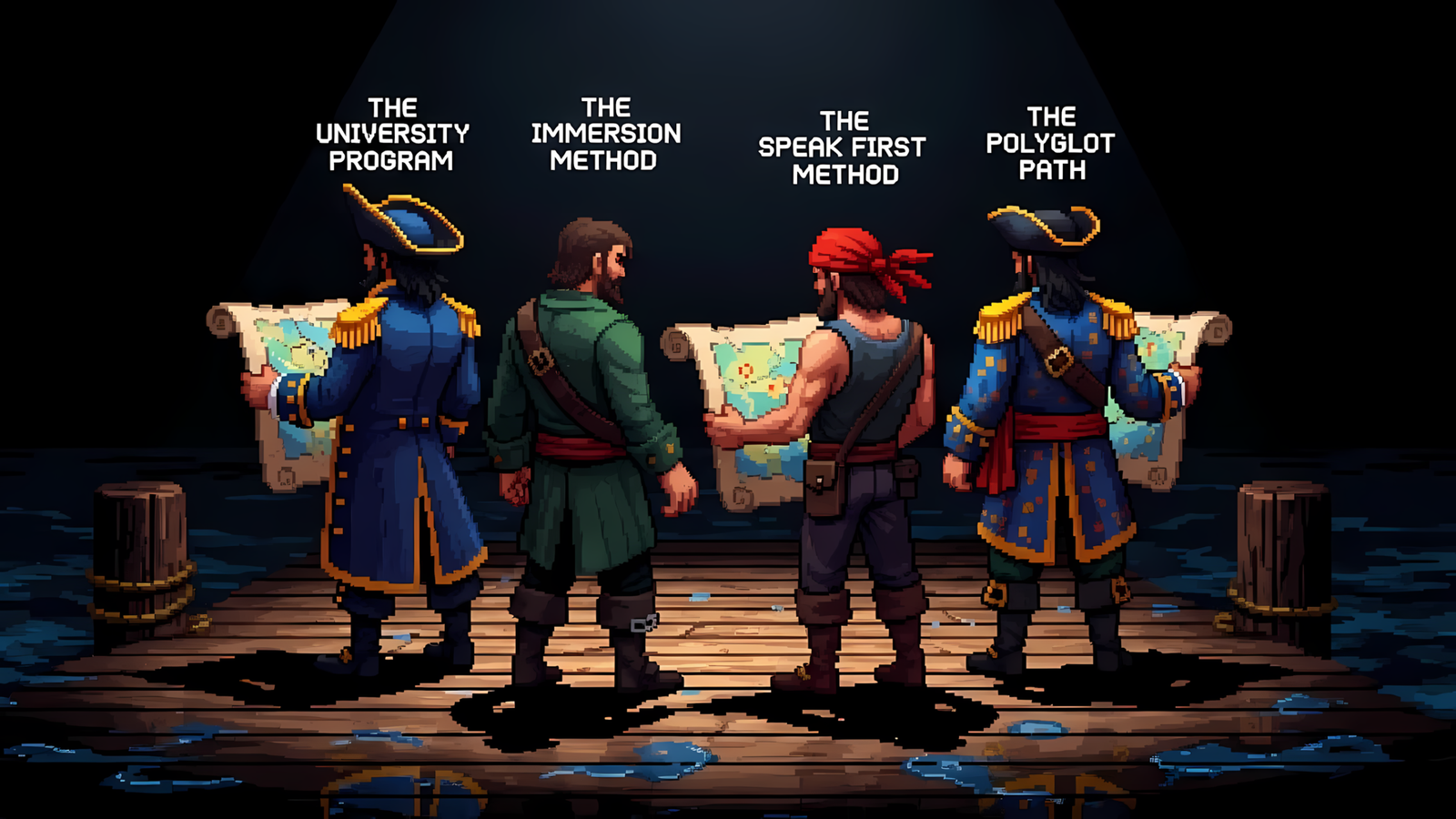
The feeling is like standing on a dock, surrounded by pirates swearing their map is the only path to the real treasure.
But when you spread all ten maps across the barrel, you realize something terrifying:
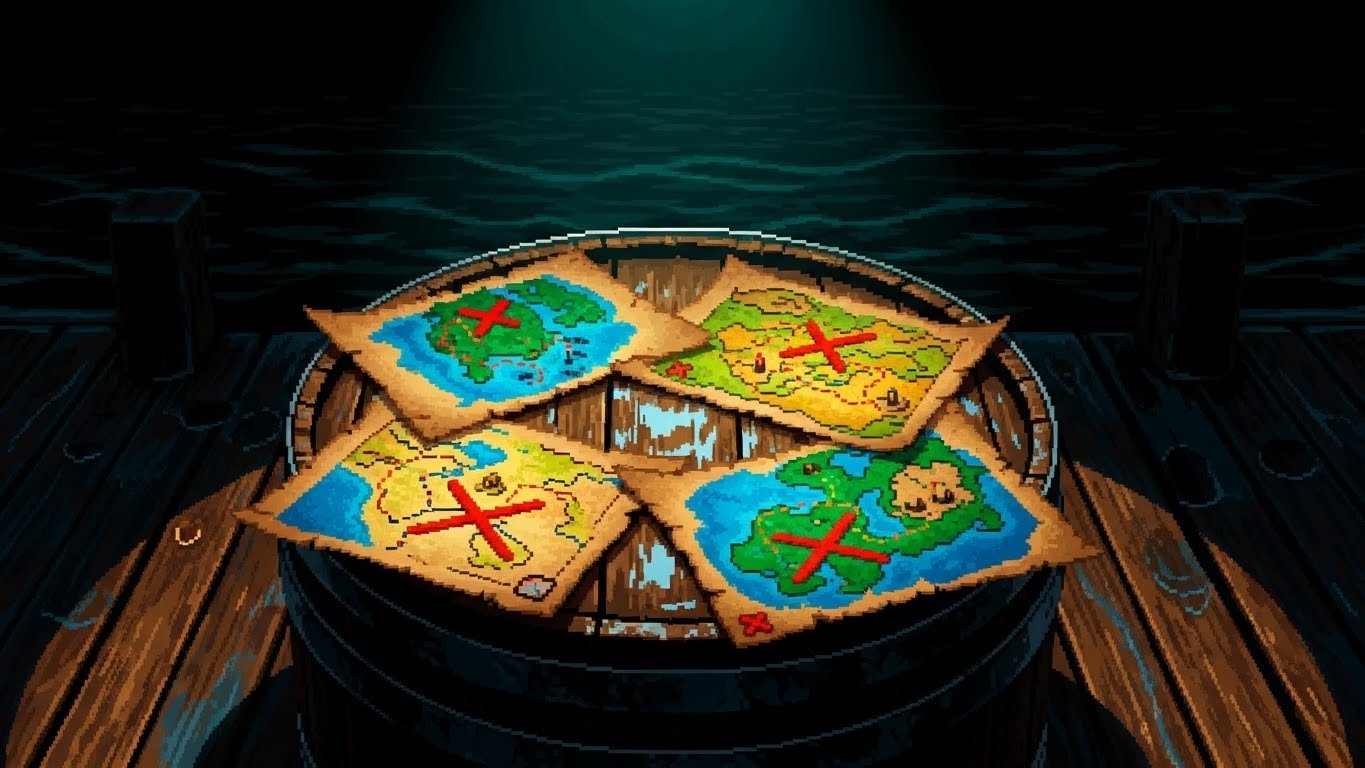
X marks a completely different spot on every map.
One captain says three months of digging with a university crew.
Another demands 8,000 hours of solo excavation from your bedroom.
A third insists if you marry a native the treasure will come to you instead.
The treasure is called “fluency.”
But ask ten people what fluency means, and you’ll get ten different definitions.
One person’s fluency is conversational confidence.
Another’s is native-like intuition.
A third’s is academic competence.
They’re all real treasure. They’re just not the SAME treasure.
And you—standing on that dock with ten maps in your hands—have no way to verify which map maker actually found the treasure YOU want.
That’s the problem.
You can’t see the treasure until someone returns with it and shows you the gold. You don’t have a native speaker standing next to you to tell you if this map maker has real treasure or fool’s gold. And you’re paralyzed because committing to the wrong map means years of your life sailing toward an island you never wanted to reach in the first place.
So let me show you what you’re actually holding in your hands.
I’m not here to sell you MY map as the only map. I’m here to show you what each map actually leads to—so you can verify which treasure you’re hunting before you commit years of your life to the wrong voyage.
This isn’t a hit piece on any method. It’s a guide to help you choose YOUR method without the paralyzing anxiety that you picked wrong.
Let’s break down the maps.
(And yes, I know some people joke about marrying into fluency. But that’s not a map. That’s a gamble. Let’s focus on the ones you can actually control.)
Map 1: The University Program

The Promise:
Four years of progressive classes. Study abroad opportunities. Cultural immersion through academic settings. Literature and formal writing courses.
The Treasure:
Academic competence. Reading comprehension. Formal communication skills. You’ll write essays that impress professors. You’ll conjugate verbs correctly on standardized tests.
The Reality:
When you land in Madrid after four years of Spanish classes and try to order coffee? The rapid-fire speech from the barista leaves you frozen.
University programs deliver exactly what they promise—academic fluency. Not street fluency.
The Fine Print:
After four years, you’ll struggle with native-speed conversation. I walked into fourth-year Korean classes as a freshman after less than four months of immersion and could take exams for fun. That tells you the pace difference.
This doesn’t mean university is useless. It means if conversational fluency is your ONLY goal, this path will feel painfully slow.
But university has benefits beyond language learning: structured curriculum, forced accountability, access to professors, credentials that open doors in certain careers.
Requirements: Money (tuition + study abroad costs), time (years of commitment), opportunity cost.
Benefits: Structure, accountability, academic credentials, cultural context through formal education.
Who This Works For: People who need credentials. People who thrive in structured environments. People pursuing careers that require formal language education.
Just know: if fluency is your treasure, you’ll need to dig outside of class too.
Map 2: The Immersion Method
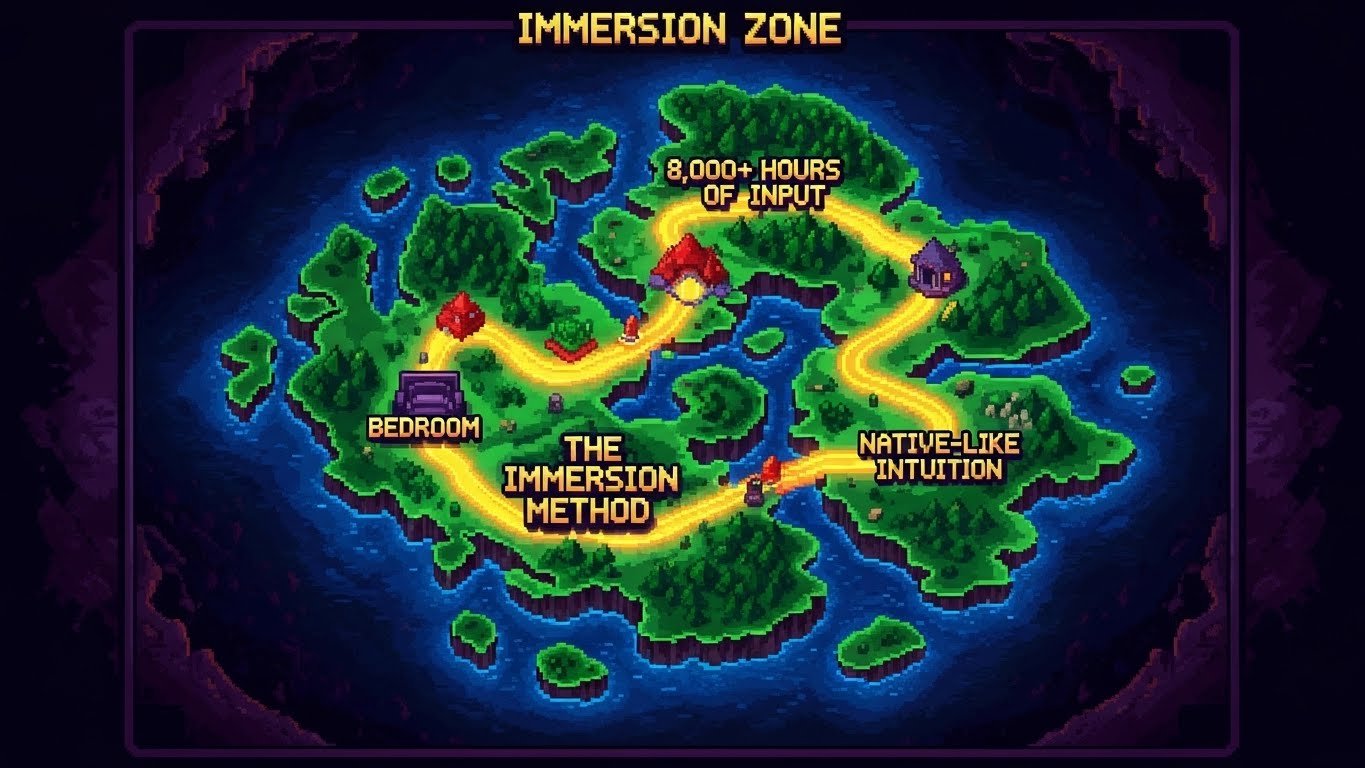
The Promise:
Forget the classroom. 8,000+ hours of comprehensible input. Minimal explicit grammar study. Massive reading and listening from your bedroom.
The Treasure:
Native-like intuition. Thinking IN the language. Unconscious grammar that “feels right.” An accent that makes natives do a double-take.
The Reality:
You’ll understand shows without subtitles. You’ll read novels meant for natives. When you finally speak, natives will ask where you lived in their country—even though you never left your room.
But you might stumble through your first real conversations because you never practiced speaking until you understood everything.
The Fine Print:
This is the map I followed. So take this with that awareness—I’m not neutral here. But I’m also not saying everyone needs to do this.
This method requires a level of dedication most people can’t sustain—and that’s fine. You’re not cursed if you can’t do 8,000 hours.
But if you DO commit, you’ll close the gap between understanding and speaking faster than you think because you won’t have many bad habits to unlearn.
The output gap is real. You’ll feel awkward when you start speaking after understanding everything. But that awkwardness passes quickly because your internal model of the language is already accurate.
Requirements: Obsession (not balance). You’re watching shows at 2am because you CAN’T stop. You’re reading on the toilet. You’re passive listening while you sleep.
Benefits: Your accent is phenomenal. Native-speed speech is normal speed. Disrupted audio that natives struggle with? You struggle at the same level they do. You’re comparing yourself to natives, not learners.
Who This Works For: If hardcore immersion doesn’t sound like your treasure, this isn’t your map. But if native-level intuition, accent, and the ability to think IN the language are what you’re hunting—this is the path.
The map isn’t wrong. Different treasure than Map 1.
Map 3: The Speak First Method
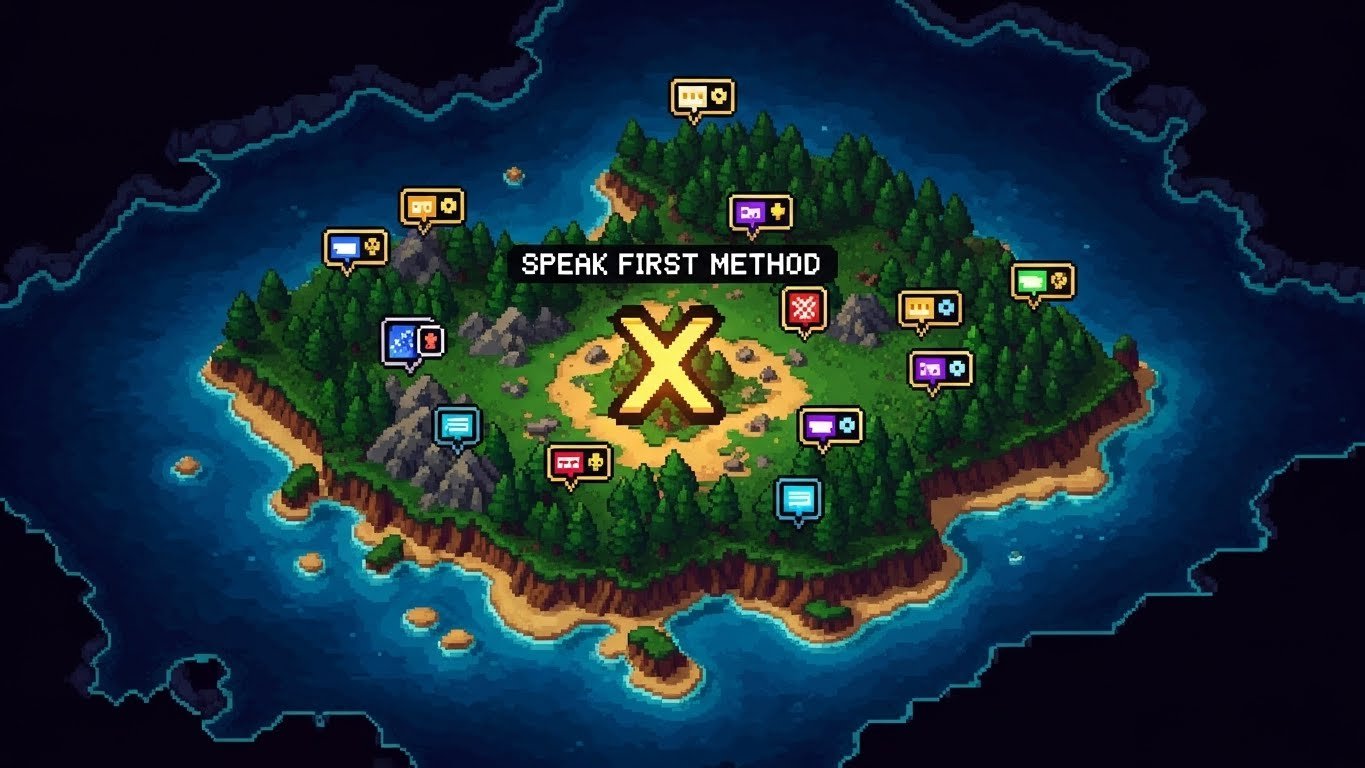
The Promise:
Speaking is everything. Start from day one with regular conversation practice. Embrace mistakes. Prioritize practical phrases over perfect grammar.
The Treasure:
Comfortable informal communication. Confidence in real interactions. The ability to stumble through conversations without freezing.
The Reality:
You’ll order that coffee in Madrid with ease. You’ll make Spanish friends. You’ll feel accomplished after every conversation.
But you might not understand the news. Complex texts feel like walls. And your accent? Natives will always know you’re foreign.
The Fine Print:
When you practice early, you’re building patterns. If you haven’t heard enough native speech yet, some of those patterns will be off.
Not wrong—just not native-like.
You’ll sound foreign, and that’s fine if that’s acceptable to you.
The challenge comes later. If you want to improve your accent or sound more native down the line, you’ll need to retrain patterns you practiced confidently from day one. It’s not impossible—it just takes more work than building accurate patterns from the start.
Here’s my perspective: I prioritize understanding before speaking because when you understand deeply first, you have more to work with when you finally start producing. You’re building on a strong foundation rather than guessing.
But that’s MY treasure. If your treasure is confidence in conversation and you’re okay sounding like a learner, this map works.
Requirements: Access to conversation partners. Comfort with looking “stupid” early. Willingness to be corrected constantly.
Benefits: You get comfortable speaking immediately. You build social confidence. You can function in daily situations faster than other methods.
Who This Works For: People who value social confidence over native-like competence. People who need functional communication NOW. People who learn best by doing, not observing.
Same island. Different X location.
Map 4: The Polyglot Path

The Promise:
Why choose? Learn multiple languages simultaneously using efficient methods. Prioritize conversational ability in each. Breadth over depth.
The Treasure:
Practical competence in 5, 10, 20 languages. The ability to travel anywhere and get by. The party trick that makes people’s jaws drop.
The Reality:
You’ll impress people everywhere you go. You’ll navigate multiple countries. You’ll feel like a citizen of the world.
But in none of those languages will you think like a native. Dream in the language. Catch every joke in a show. Feel the poetry when someone speaks beautifully.
The Fine Print:
“Speaking 20 languages” often means “I can introduce myself in 20 languages.” The shock factor is real, but depth isn’t.
You’ll never feel like you BELONG in any of those languages. You’ll always be the tourist who knows more than other tourists.
There’s also this: when you’re learning multiple languages simultaneously, you’ll feel like you’re getting worse at Language A while studying Language B, then worse at B while studying C. That anxiety is real.
The best polyglots I’ve seen either went deep on one or two languages first, or they’re working with related languages (Spanish/French/Italian) where comprehension transfers more easily.
Requirements: High tolerance for surface-level competence. Acceptance that you’ll never go deep. Rotating focus between languages without losing your mind.
Benefits: You can connect with people across the globe. You see patterns between languages. You become a better overall learner.
Who This Works For: People who value breadth over depth. People who want to connect across cultures without needing to belong deeply in any one language. People who thrive on variety and pattern-recognition.
Not worse treasure—just different treasure.

Struggle Less. Acquire More. Enjoy Life.
Studied at Yonsei University. Worked in Korean politics. Reached fluency in 18 months through pure immersion.
Now I help language learners cut through the noise and achieve what most think is impossible.
Gain A New Perspective On Language & Life
I went from understanding 0% of Korean dramas to discussing politics at Yonsei in 25 months—using the same immersion principles I teach every Saturday.