Not A Subscriber?
Join 752+ language learners getting mindf*cked every Saturday morning while getting Immersed.
30 Minutes A Day To Never Forget A Word Again
January 11th, 2025 | Ademola Adeyemi
“Bruh… I swear I kno..
I knew what this meant…”
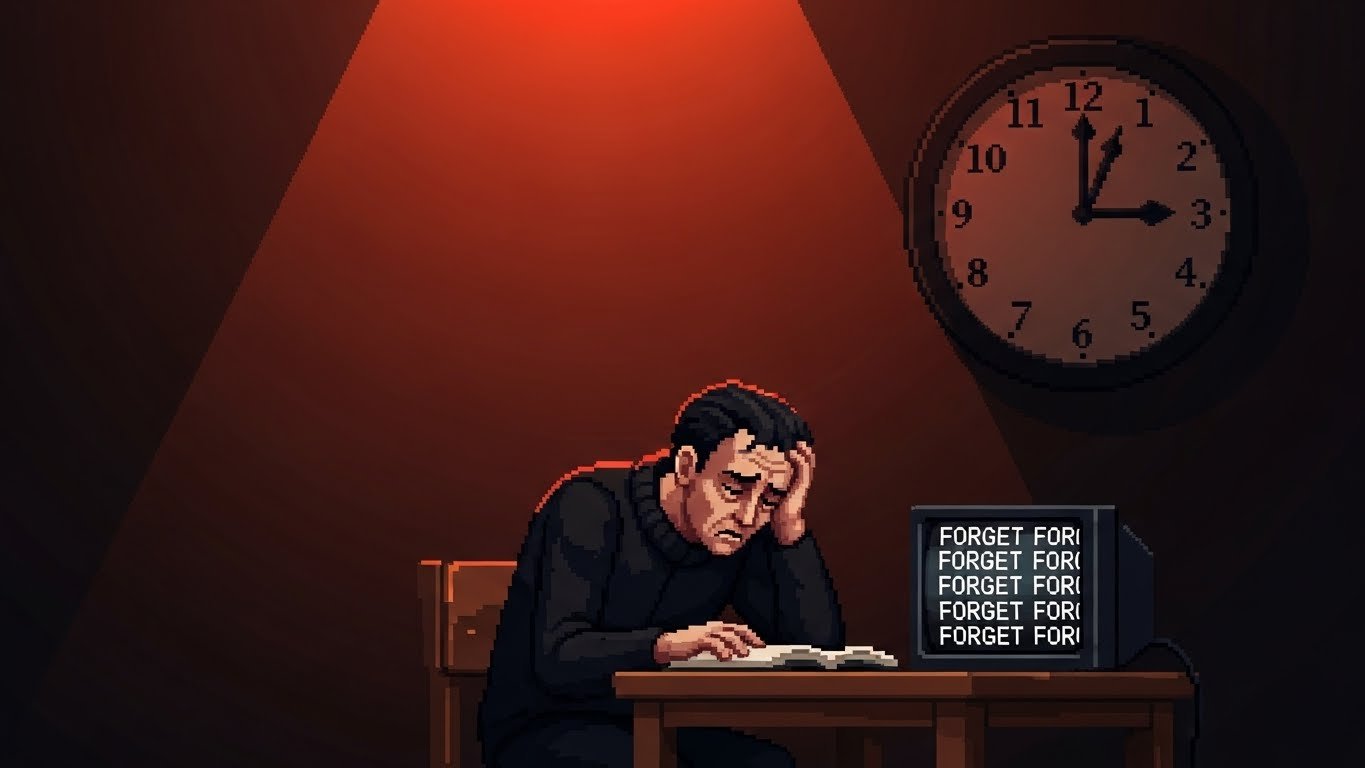
You look up the same word for the fifth time this month.
You know you’ve seen it before. You remember looking it up. You might even remember what app you used.
But the meaning? Gone.
So you look it up again. You tell yourself you’ll remember this time. You might even write it down somewhere.
A week later, it happens again.
And somewhere in the back of your mind, a thought creeps in:
“I can’t do this. My brain is broken. I’ll never get fluent at this rate.”
Let me stop you right there.
This isn’t a “you” problem. This is a biology problem.
In 1885, a German psychologist named Hermann Ebbinghaus made a discovery that changed education forever. He found that we forget roughly 70% of new information within 24 hours.
He called it the “forgetting curve.”
But here’s what Ebbinghaus also understood:

“Mental states of every kind (sensations, feelings, ideas) which were at one time present in consciousness and then have disappeared from it, have not with their disappearance absolutely ceased to exist.”
Hermann Ebbinghaus
Read that again.
The words you “forgot” didn’t vanish. They’re still in there somewhere. Your brain just filed them away in a drawer you can no longer access.
Your brain isn’t broken. It’s doing exactly what it evolved to do (filtering out information it doesn’t think you need).
The problem? Your brain has no idea which words you actually need. So it dumps them all.
Here’s where it gets interesting.
Ebbinghaus didn’t just discover the problem. He discovered something else: the forgetting curve is predictable.
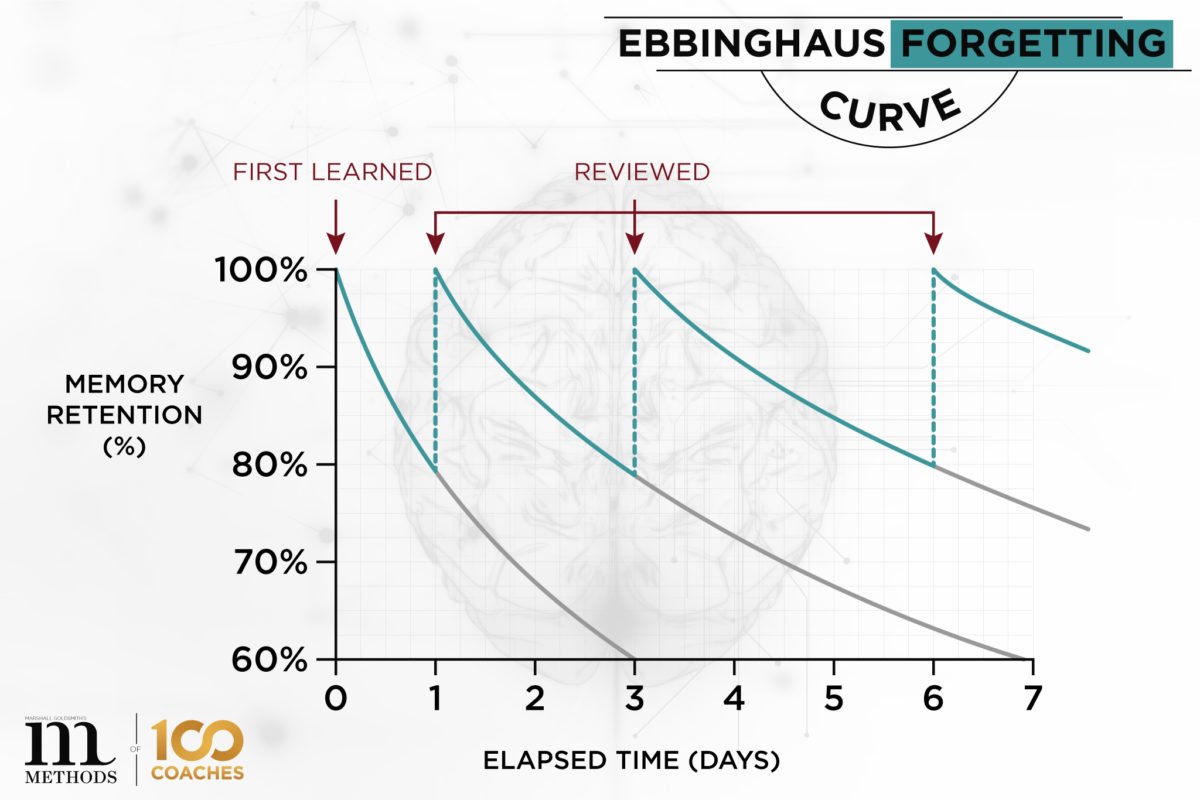
Your brain forgets on a schedule. Like clockwork.
Which means if you know when you’re about to forget something, you can review it at exactly the right moment (right before that drawer locks forever) to keep it accessible permanently.
This isn’t theory. This is a 140-year-old system that language learners, medical students, and competitive memory champions have been exploiting quietly for decades.
It’s called a Spaced Repetition System. An SRS.
And it only takes 30 minutes a day.
Here’s what that looks like in practice:
- 10 new words per day
- 365 days per year
- 3,650 words in 12 months (without cramming, without burnout, without forgetting)
That’s not a typo. That’s the math working in your favor instead of against you.
But here’s the thing most people get catastrophically wrong:
They think the SRS is where you learn.
It’s not.
The SRS is where you don’t forget.
Input is the teacher. SRS is the maintenance crew.
Get that backwards and you will review thousands of cards but never understand a conversation.
By the end of this newsletter, you’ll understand:
- Exactly how this system works
- Why everything you’ve tried before failed
- The 5 steps to dramatically reduce how often you re-look up words you’ve already learned
Let’s fix your memory.
Your Brain Is Throwing A Party (And Words Keep Leaving)
Here’s an analogy I came up with that pulls this together:
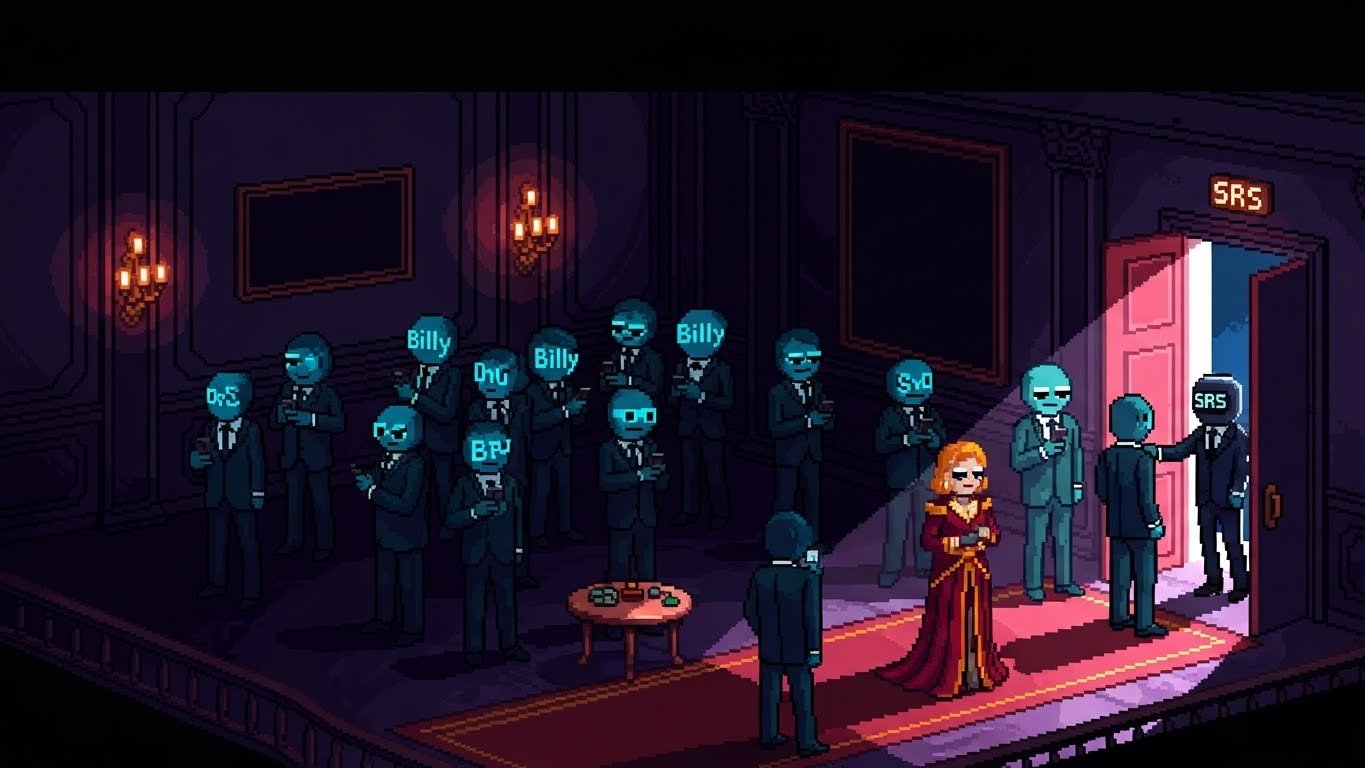
Imagine your brain is a house. And you’re throwing a party.
The guests? Words.
Your mission is simple: Keep everyone at the party as long as possible.
You want the biggest party of words ever. You want every single word in that house, having a good time, sticking around.
But here’s the thing about parties.
People leave.
Some guests you see every single day. Let’s call one of them Billy.
Billy is like your coworker. You’re not even that good with names, but every time Billy walks in, you get reminded. People say his name out loud. You see his face constantly. You couldn’t forget Billy if you tried.
Billy is the word for “I” in your target language. The word for “and.” The word for “this.” These words show up so often that your brain keeps them at the party automatically.
But then there’s Dorothy Kline Dexter.
Dorothy Kline Dexter is someone you met once. Her name is so unusual, so interesting, that your brain went “what the hell?” and filed it away permanently. You see her five years later and her name comes straight to your mind.
Dorothy is the curse word you heard in that one scene. The slang from the meme that made you laugh. The emotional phrase from the drama that slapped you in the face.
Some words stick because of sheer exposure. Some stick because they left an imprint.
But most words?
Most words are neither Billy nor Dorothy.
Most words are just… people at the party. And if you don’t actively keep them engaged, they’re going to check their phone, look at the door, and slip out.
The SRS is how you keep people from leaving the party.
It watches who’s about to head for the exit. It taps them on the shoulder right before they leave. It keeps them in the house just long enough that they decide to stay.
How The Algorithm Actually Works
So how does the SRS know who’s about to leave?
This is the part that makes it different from Quizlet, notebooks, or any other flashcard system you’ve tried.
Traditional review means you decide what to study. You guess what you need to practice. Maybe today you review colors. Tomorrow you review animals. And you’re basically hoping you don’t forget anything in between.
But here’s a practical question: If you had 1,000 words in your notebook, which ones would you review today?
How do you decide?
You don’t. You can’t. There’s no way to know which word is about to slip from memory.
That’s what the algorithm does for you.
The SRS watches your performance. Every time you review a card, you tell the system: “I got this” or “I struggled.”
- Hard words? You can’t seem to pass every time. They show up more often.
- Easy words? Words that you pass when you are shown them. They disappear for longer and longer intervals (a week, then two weeks, then a month, then four months).
The system is constantly recalculating: When is this word about to slip?
And it shows you that word right before it does.
You don’t review 1,000 cards daily. The algorithm might surface 50-100 (targeting exactly what’s about to slip from memory). Nothing more, nothing less.
Here’s the magic moment that proves it’s working:
You learn the word for “I” on day one. You review it a few times. Then the algorithm stops showing it to you.
Three months later, you realize: “Wait, I haven’t seen this card in forever. Why do I still remember it?”
Because you’ve been immersing. That word shows up constantly in everything you watch. Your brain keeps it at the party through pure exposure. The algorithm adapted to the fact that it lives rent-free in your head.
That’s the system working correctly.
“But Reviewing Every Day Sounds Exhausting”
This is where most people pump the brakes.
They hear “every day” and picture themselves staring at a notebook for hours, reading definitions, questioning if they’re even doing it right.
That’s not what this is.
Remember: the algorithm optimizes everything. You’re not reviewing every word you’ve ever learned. You’re reviewing the 50-100 words that are specifically on the threshold of being forgotten today.
Some days that takes 20 minutes. Some days 40 minutes. But it’s never the mountain of “review everything equally” that traditional flashcards demand.
The daily habit isn’t a burden. It’s what makes the system work.
Here’s why:
The SRS calculates when each word is about to slip from memory. It schedules your reviews based on that calculation. But if you don’t show up, those calculations break.
Think back to the party.
There’s a word knocking on the door of your memory. It’s saying, “Hey, remember me? I’m about to leave.”
If you show up (if you do your daily review) you answer that knock. The word stays.
If you skip a day? You ignored the knock. The word left.
Then you encounter that word again in the wild and you’re like, “Wait, where did you go? I thought you were still at my place.”
And the word is like, “Dude. You never came back to check on me. I couldn’t stay any longer. My time expired.”
That’s what the forgetting curve actually looks like. Not a smooth decline (a series of knocks on the door that you either answer or ignore).
The daily review isn’t punishment. It’s just you answering the door.
The Trap Most Learners Fall Into
Here’s where I see people mess this up constantly:
They spend more time in their SRS than they do actually consuming content.
They think, “I need to study. I need to study. This is where the learning happens.”
So they sit in Anki for two hours. They grind through cards. They feel productive.
Then they watch 20 minutes of a show and call it a day.
This is backwards.
The ratio that actually works? 80% immersion, 20% SRS.
Not 50/50.
Not “equal time studying and watching.”
80/20.
The more you increase your immersion, the more you have to draw from. The more context you build. The more Billys and Dorothys you meet.
The SRS doesn’t give you new party guests. The content does. The SRS just keeps them from leaving.
If you’re spending half your time in the SRS and half your time immersing, you’re going to plateau hard. You’ll feel like you’re working but not growing.
I’ve been there. It sucks.
The breakthrough comes when you flip the ratio. More input. More content. More listening, watching, reading.
The SRS is maintenance. 30 minutes. Then you close it and go live in the language.
The 30-Minute Memory System (5 Steps To Never Forget Again)
“10 new cards per day” doesn’t sound impressive.
It sounds almost… lazy?
But let’s do the math:
- 10 cards × 365 days = 3,650 words per year
- 3,650 words is roughly the vocabulary size needed for conversational fluency in most languages
- And you didn’t cram a single one
The system works because the algorithm handles review scheduling automatically. You’re not manually deciding what to study. You’re just showing up for 30 minutes, trusting the process, and watching your vocabulary compound silently in the background.
Here are the 5 steps to make it work.
Step 1: Pick Your Weapon (Anki or Migaku)
You have two main options:
Anki — Free, open-source, and the gold standard for serious language learners. It’s not pretty, but it works. You can customize everything, and there’s a massive community creating shared decks and add-ons (Click here to view shared decks).
Migaku — A paid suite of language learning tools with browser extensions for instant dictionary lookup and automated audio capture from streaming content. It integrates directly with Netflix, YouTube, and other platforms to create cards while you watch.
Here’s why I use Migaku:
Back in the day, I used to use ShareX for recording audio & screenshots, then Anki separately, then I’d have to find the right deck, make sure I created all the fields, copy and paste the dictionary entry, find a photo, maybe try to get a GIF…
That took minutes per card.
Migaku takes one button click.
Look up a word, click, and the sentence, audio, definition (everything) gets added automatically. That’s what makes the system sustainable. When adding cards is frictionless, you actually do it.
You can sign up for Migaku with my affiliate link (Click here) At the time of this letter New Years sale has Lifetime access down 50% for a limited time.
But honestly? Don’t overthink this.
Both work. Anki is free and powerful. Migaku is convenient and integrated.
Pick one and start today.
The best SRS is the one you’ll actually use. Spending three weeks researching the “optimal” tool is three weeks you could have spent learning 210 words.
Step 2: Create Sentence Cards, Not Word Cards
This is where most people go wrong.
They create cards with a single word on the front and a definition on the back.
The problem?
Look up 좋아하다 (to like) in Korean, and you’ll find six different definitions:
- To have good feelings towards something
- To have special liking for certain food
- To enjoy doing something
- To have affection for someone
- To like each other
- To show happiness or joy
Which definition do you memorize? All six? That’s an impossible cognitive burden.
Sentence cards solve this problem.
Instead of studying a word in isolation, you capture a full sentence from content you’re watching (where only one element blocked your understanding).
This is Stephen Krashen’s “i+1” principle in action: one unknown element in an otherwise comprehensible sentence.
Example:
You’re watching a K-drama. The male lead says “나는 너를 좋아해” to his love interest. You understand “I” and “you” but not the verb.
You create a card with that sentence.
Now you’re not memorizing abstract definitions. You’re learning that 좋아해 is what someone says during a romantic confession, with specific emotional context attached.
The context does the heavy lifting. The sentence provides meaning scaffolding.
One unknown word per card. That’s the rule.
If a sentence has more than three unknown words, it doesn’t belong in your SRS. Find simpler content or look up those words separately first.
Step 3: Put Audio On The Front (Personally Non-Negotiable)
Here’s the fundamental gap most learners ignore:
You might know every word in a sentence when you read it (but completely fail to understand it when a native speaker says it at normal speed).
The problem isn’t vocabulary. It’s listening comprehension at natural speed.
Textbook audio doesn’t prepare you for this. Slowed-down speech doesn’t prepare you for this. Only exposure to real native speech prepares you for this.
So flip your card structure:
- Front: Sentence audio only (nothing else)
- Back: Written sentence, target word, word audio, definition, image, notes
When you review, you’re training the skill that actually matters: understanding what someone said, as they said it, at the speed they said it.
The review mindset I use: “If my friend said this to me, would I understand?”
Play the audio. If you comprehend the message (if you could respond appropriately) pass the card.
When you fail to understand:
- Re-listen 4-5 times with eyes closed
- Focus on parsing the sounds
- Make a guess before checking
- Look at the back only after genuine effort
- Read the sentence and notice how clearly you can now hear it
- Fail the card and move on
That moment (when you read the words and suddenly hear them clearly) that’s the learning happening. Your brain connects the written and spoken forms through this process.
Audio-first (that’s the way I’ve always done it).
Note: This is of course dependent on you watching or listening to something. If you were reading, then you work with what you have. Mirror the input on the front and extras on the back. Similar protocol.
Step 4: Add 10-25 New Cards Daily (Find Your Threshold)
Let me be clear: 10 cards a day is not the Bible of SRS card creation.
I’m speaking from personal experience, not scientific law.
Here’s what I found:
- 5 cards/day felt like I could do more. Never felt like enough.
- 100 cards/day? You can imagine where that went.
- 10-25 cards/day was the sustainable sweet spot.
That’s the threshold where I felt like I was doing plenty without burning out. Anything above felt like stress. Anything below felt like I was falling behind.
Start with 10. See how it feels. Adjust up to 25 if you want more.
The key is sustainable daily review, not maximum daily creation.
One more thing: prioritize words based on frequency.
If you only know 300 words, your priority should be the 1,000-2,000 frequency range. These are the building blocks that show up everywhere.
Once you know your first 1,000-1,500 words, you have the makeup of the language in your head. The SRS won’t need to do much work for those common words anymore (they’ll appear constantly in your immersion and stay at the party automatically).
That’s when you start adding the detail words. The specific nouns. The domain vocabulary.
But start with the foundation.
Step 5: Review Every Single Day Without Exception
This is where the magic happens.
The algorithm does the heavy lifting. Cards you know well appear less frequently. Cards you struggle with appear more often. The system optimizes review time automatically.
But the system only works if you show up.
Miss a day, and your reviews pile up. Miss a week, and you’re facing a mountain that kills motivation.
30 minutes. Every morning. No exceptions.
That’s the habit.
You won’t review 1,000 cards. The algorithm might surface 50-100, targeting exactly what needs reinforcement that day.
Some days feel easy. Some days are harder. Both are the system working correctly.
The investment: 30 minutes daily.
The return: A vocabulary that grows automatically and rarely disappears.
A Note On Grace (Because You’re Going To Forget Words Anyway)
I want to be honest with you.
You’re still going to look up words you’ve learned. You’re still going to forget things. You probably do this in your native language too.
The human brain is not a hard drive. It wasn’t designed to store 10,000 vocabulary words perfectly indexed and accessible on demand.
Our goals and our biology are not directly aligned 90% of the time. We’re fighting our own wiring here. And that’s okay.
Here’s what I want you to remember when you find yourself looking up that same word for the third time:
You are not broken.
You’re human.
Some words just won’t stick. Your brain doesn’t vibe with them. Maybe your energy was low when you first saw it. Maybe you were stressed. Maybe you were overwhelmed from reviewing too many cards that day.
And here’s the thing (that’s fine).
The standard frequency list tells you what words are “most common” in the language. But that’s not your frequency list.
Your frequency list is built by what you watch.
If you’re obsessed with crime dramas, words that rank 10,000 on the standard list might show up every single episode for you. They’ll stick better than “common” words you never encounter in your content.
Your brain builds its own frequency list based on your ears. The more a word hits your ears in real situations, the more likely it stays at the party.
So when a word keeps failing (when you keep seeing it and it just won’t click) don’t die on that hill.
Unless that word is essential for what you’re consuming, let it go.
Suspend the card. Move on.
Focus on the words that are sticking. Celebrate those. They’re proof the system works.
And for the stubborn ones? Tell yourself: “I’ll understand this when I get more context.”
I stopped studying grammar explicitly at one point. I just immersed. And you know what happened? Grammar that wouldn’t stick from English explanations started clicking through pure exposure.
I’d see a pattern in three different scenes. Four different speakers. Five different emotional contexts. And suddenly (without trying) I understood it.
Understanding shapes itself over time. It strengthens. It solidifies. One day you wake up and think: “Wait. I just understood everything in that conversation.”
That moment doesn’t come from grinding harder in your SRS.
It comes from trusting the process and giving yourself grace along the way.
The Real Secret
Here’s the truth nobody wants to hear:
Immersion is the greatest SRS.
The content you consume is already reviewing words for you (automatically, in context, with emotional weight attached). Every show, every video, every song is reinforcing the words that matter for your specific journey.
The SRS is just a bridge.
It connects you to words you don’t get enough natural exposure to. It keeps the stragglers at the party while you’re out living in the language.
But it’s not the party itself.
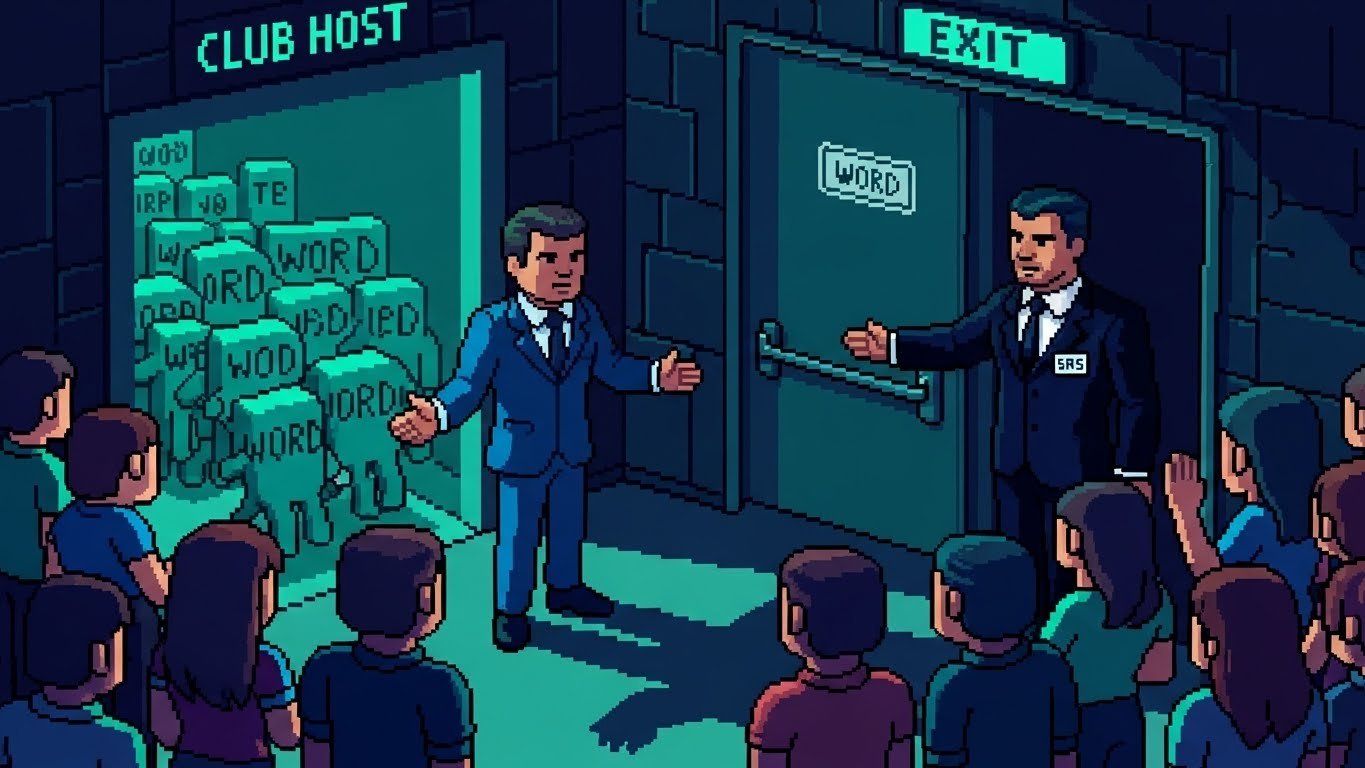
The party is immersion. The SRS is the bouncer making sure nobody sneaks out the back door.
That’s The System
- Pick your tool
- Create sentence cards with audio
- Add 10-25 per day
- Review daily
- Keep the ratio at 80/20 (immersion first, SRS second)
30 minutes. 3,650 words per year. A memory that actually works.
Input is the teacher. SRS is the maintenance crew.
Get that right, and you’ll drastically reduce how often you look up the same word twice.
Will you still forget sometimes? Yes. You’re human.
But you’ll forget less. You’ll recover faster. And you’ll stop hating yourself for being imperfect.
The only question is whether you’ll answer the knock on the door tomorrow morning (and give yourself grace when a few guests still slip out anyway).
If you’re interested in the tools I use:
Migaku covers most of the technical sides of things – use my link for 10% off Lifetime or +1 free month (try it out 10 days free): migaku.com/adeimmersed

Struggle Less. Acquire More. Enjoy Life.
Studied at Yonsei University. Worked in Korean politics. Reached fluency in 18 months through pure immersion.
Now I help language learners cut through the noise and achieve what most think is impossible.
Gain A New Perspective On Language & Life
I went from understanding 0% of Korean dramas to discussing politics at Yonsei in 25 months—using the same immersion principles I teach every Saturday.